
No heat at all
The system runs but nothing warm arrives, or it does not start. On a gas furnace this is often ignition; on a heat pump it may be refrigerant.
Home/Heating Repair
North Texas winters are mild until they are not. When a cold front drops in and the heat will not come on, we handle gas furnaces, heat pumps, and electric systems.
Heating problems tend to show up on the first genuinely cold night of the year, which is also when every company in the county is busy. Catching them early matters.
The system runs but nothing warm arrives, or it does not start. On a gas furnace this is often ignition; on a heat pump it may be refrigerant.
Repeated clicking followed by silence usually means a failed igniter, a dirty flame sensor, or a safety switch shutting off the gas.
Heat comes on and shuts off before the house warms. Often a restricted filter, a flame sensor issue, or an overheating limit switch.
A brief dusty smell on the first run of the season is normal. A burning smell that continues past the first cycle is not.
Some rooms warm and others stay cold points to airflow and duct problems more often than the furnace itself.
In a cold snap some continuous running is normal, but a heat pump that never satisfies the thermostat has usually lost capacity.
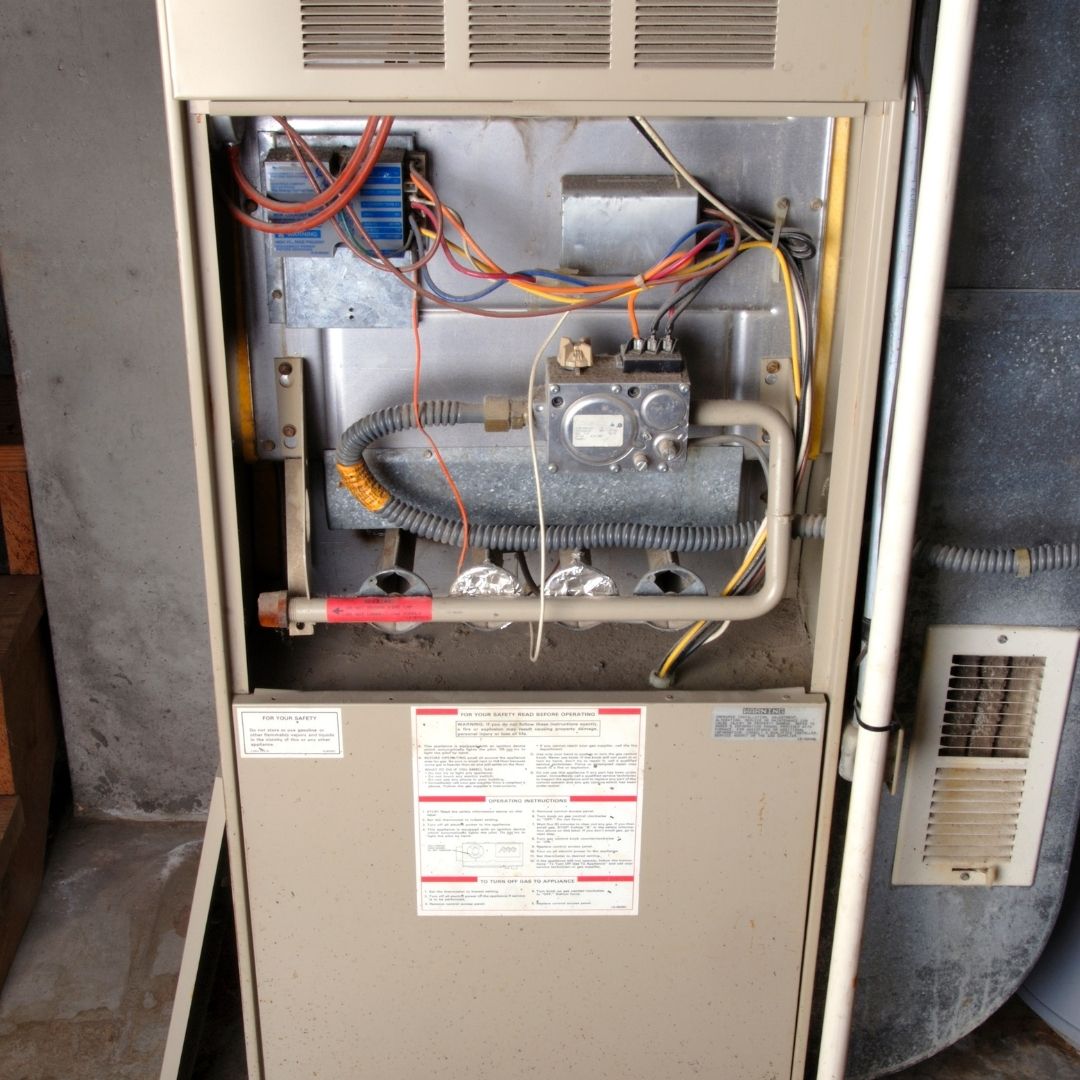
Most homes around Ellis County run either a gas furnace or a heat pump, and the troubleshooting has almost nothing in common between the two.
A gas furnace is a sequence of safety checks. The thermostat calls, the inducer motor runs, a pressure switch confirms draft, the igniter heats, gas opens, and a flame sensor confirms the burner actually lit. If any step fails to confirm, the furnace shuts the gas off — which is exactly what it should do. Most no-heat calls are one of those confirmations failing, commonly a dirty flame sensor or a worn igniter.
A heat pump is an air conditioner running backwards, pulling heat from outside air. When one blows cold, the cause is usually a reversing valve, a refrigerant charge problem, or a defrost control issue. Brief cool air during a defrost cycle is normal and not a fault.
Heat involves combustion and gas, so the inspection covers safety alongside function.
Ignition sequence check. Igniter, flame sensor, gas valve, and pressure switch tested through a full firing cycle.
Safety inspection. Heat exchanger condition, venting, and limit switches — the parts that matter beyond comfort.
Blower and airflow. Motor, capacitor, and filter restriction, since most overheat shutdowns trace back to airflow.
Heat pump diagnostics. Refrigerant charge, reversing valve operation, and defrost board function on heat pump systems.
Thermostat verification. Wiring and staging confirmed, because a surprising number of no-heat calls end here.
Written price first. You approve the cost before any repair work starts.
Leave the house, and from outside call your gas utility or 911. Do not flip switches, unplug anything, or use the garage door on your way out. Call us after the situation has been made safe.
Same process as any service call, with combustion safety layered on top.
Tell us the system type if you know it and what it is doing. Gas furnace and heat pump calls get approached differently.
Full firing sequence on a furnace, or full refrigerant and defrost check on a heat pump.
What failed, why, and the cost to repair it. Safety issues get called out plainly.
System runs through a complete cycle with you there before we finish.
Everything we handle for homeowners across the Dallas–Fort Worth area.
Diagnosis and repair for systems blowing warm, running constantly, or not starting.
Properly sized replacements when repair no longer makes financial sense.
Spring cooling checks and fall heating checks to catch problems early.
Filtration, duct sealing, and humidity control for dusty or uneven homes.
Serving Ellis County, southern Dallas County, and the surrounding Dallas–Fort Worth metroplex.
We also serve Mansfield in Tarrant County, Venus and Alvarado in Johnson County, and Corsicana in Navarro County. Just outside the list? Give us a call at (214) 730-3063.
Gas furnaces, heat pumps, and electric heat across the Dallas–Fort Worth area.
Monday–Friday 8:00am–5:00pm · After-hours emergency service available