
Blowing warm air
The fan runs but nothing cold comes out. Usually a capacitor, contactor, or refrigerant problem rather than the thermostat.
Home/AC Repair
When the AC quits in the middle of a North Texas summer, you need a real diagnosis and a real price, not a guess. We find what actually failed and tell you what it costs before we touch it.
Any one of these is worth a call. Several together usually means something is failing rather than just dirty.
The fan runs but nothing cold comes out. Usually a capacitor, contactor, or refrigerant problem rather than the thermostat.
No response from the outdoor unit. Check the breaker first, then call — repeatedly resetting a tripping breaker is a fire risk.
Vents barely moving air points to a clogged filter, a failing blower motor, a frozen coil, or duct problems in the attic.
The system kicks on and off every few minutes. It never removes humidity, and the constant starting wears out the compressor fast.
Frost on the refrigerant line or indoor coil means restricted airflow or low refrigerant. Both get worse if you keep running it.
A clogged condensate drain backs up into the pan and then into the ceiling. This one causes real damage if it waits.
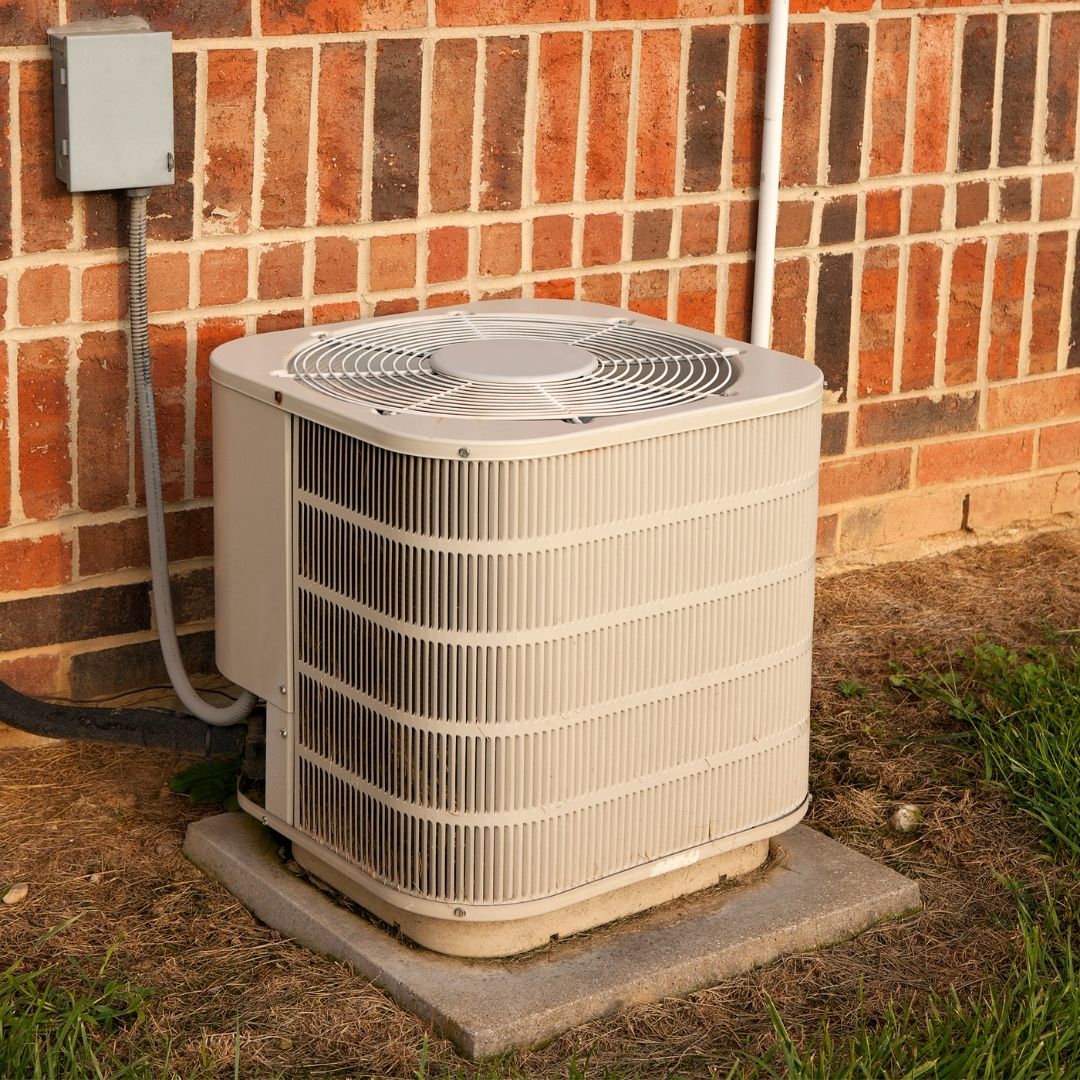
Equipment here runs from April into October, often twelve or more hours a day through the worst of it. That workload puts the failures in a predictable order, and after enough summers you learn to check them in that order.
Capacitors top the list. They are inexpensive, they degrade with heat, and a weak one keeps the compressor or fan motor from starting. Contactors are next — the contacts pit and burn until they no longer close reliably. After that it is condenser coils packed with cottonwood and grass clippings, condensate drains clogged with algae, and refrigerant leaks at the line set or evaporator.
The point of diagnosing properly is that several of these look identical from inside the house. Warm air at the vents could be a twenty dollar part or a failed compressor, and you should not have to take anyone's word for which one it is.
Every call follows the same sequence so nothing gets skipped and nothing gets guessed at.
Full system check. Thermostat, breaker, filter, indoor blower, and outdoor unit — not just the part you noticed.
Electrical testing. Capacitors, contactors, and motor windings measured under load rather than eyeballed.
Refrigerant verification. Pressures and temperature split checked against what the system should be doing.
Airflow inspection. Coil condition, filter restriction, and obvious duct problems that keep a good system from performing.
Written price first. You hear the cost and approve it before any repair begins.
Test before we leave. The system runs and gets verified with you there, not driven away from and hoped for.
Turn the system to off and the fan to on. That thaws the coil and prevents liquid refrigerant from reaching the compressor, which is the expensive part. Then call — the ice is a symptom, and it returns until the cause is fixed.
No dispatch maze, no sales pitch on the doorstep.
Tell us what the system is doing and roughly how long it has been doing it. That narrows things before we arrive.
Full check of the system, not just the obvious symptom, so we do not fix one thing and miss another.
The failed part, why it went out, and what the repair costs. You decide from there.
Work gets done and the system gets tested with you present before we call it finished.
Everything we handle for homeowners across the Dallas–Fort Worth area.
Gas furnaces, heat pumps, and electric heat when the house will not warm up.
Properly sized replacements when repair no longer makes financial sense.
Spring cooling checks and fall heating checks to catch problems early.
Filtration, duct sealing, and humidity control for dusty or uneven homes.
Serving Ellis County, southern Dallas County, and the surrounding Dallas–Fort Worth metroplex.
We also serve Mansfield in Tarrant County, Venus and Alvarado in Johnson County, and Corsicana in Navarro County. Just outside the list? Give us a call at (214) 730-3063.
Same-day service in most cases when you call before noon. After-hours emergency calls welcome.
Monday–Friday 8:00am–5:00pm · After-hours emergency service available