Air Conditioning Repair
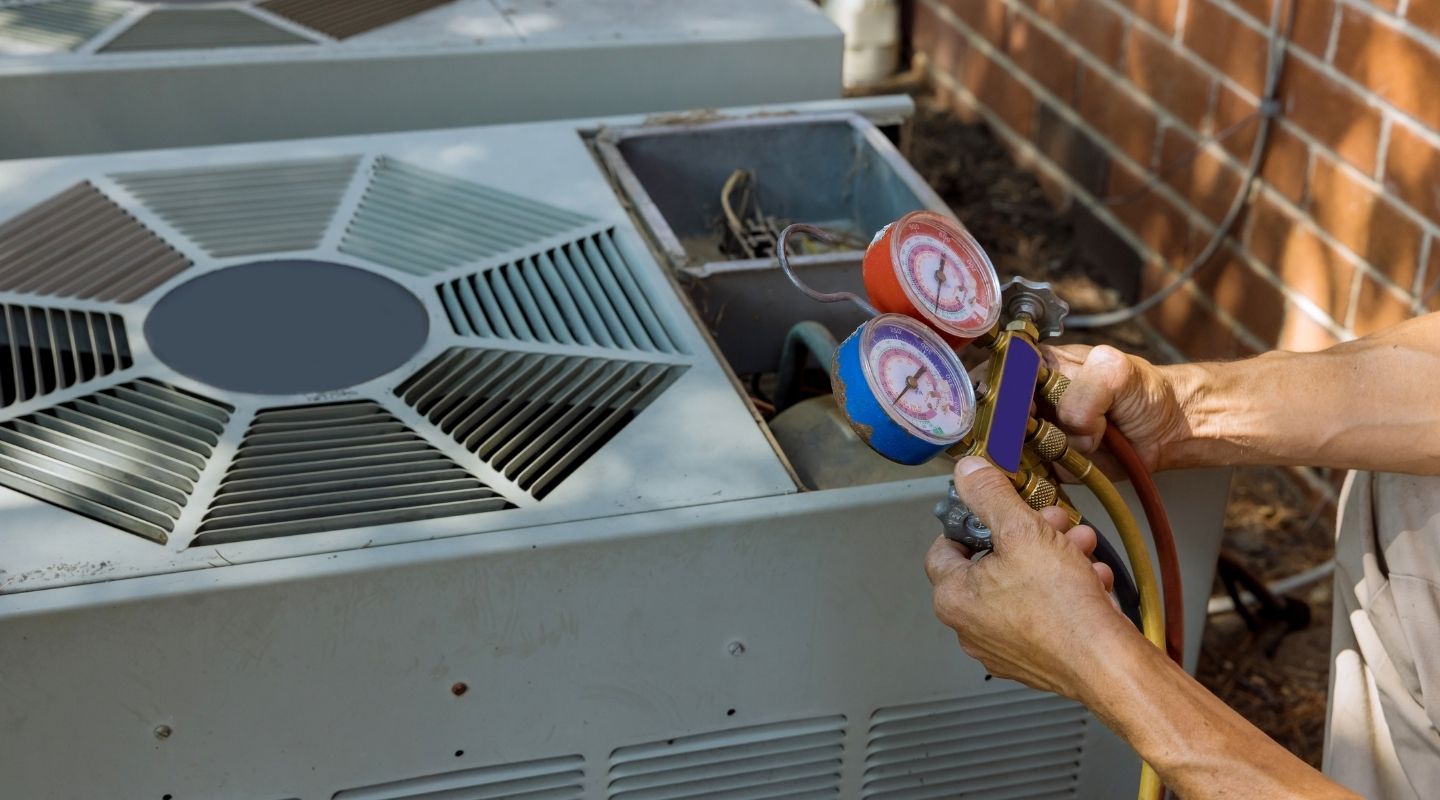
Warm air, weak airflow, short cycling, or a unit that won't turn on. We diagnose the actual fault and tell you what it costs to fix before we touch anything.
AC repair detailsManuel Guerrero HVAC keeps homes across the Dallas–Fort Worth area cool through the summer and warm through the winter. Straight answers, clean workmanship, and a price you hear before the work starts.
Serving homeowners across the Dallas–Fort Worth area.
Same-day service in most cases when you call before noon.
You approve the price before any work begins. No surprises.
Call or text and talk to someone who works on the equipment.
Repair, replacement, and maintenance for the systems that keep your house comfortable year round.
Warm air, weak airflow, short cycling, or a unit that won't turn on. We diagnose the actual fault and tell you what it costs to fix before we touch anything.
AC repair detailsGas furnaces, heat pumps, and electric systems. Ignition faults, blower problems, thermostat issues, and no-heat calls during the first cold snap.
Heating repair detailsWhen repair stops making sense, we size the replacement to your home instead of guessing from the old unit, and walk you through the options side by side.
Replacement detailsA spring cooling check and a fall heating check. Coils cleaned, refrigerant charge verified, electrical connections tightened, and small problems caught early.
Maintenance detailsFiltration upgrades, duct sealing, and humidity control for houses that stay dusty, feel muggy, or have rooms that never quite match the thermostat.
Air quality detailsA house without cooling in a Texas August is not a wait-until-Monday problem. Call the shop line after hours and we'll get you handled.
After-hours calls welcome
Why homeowners call us back
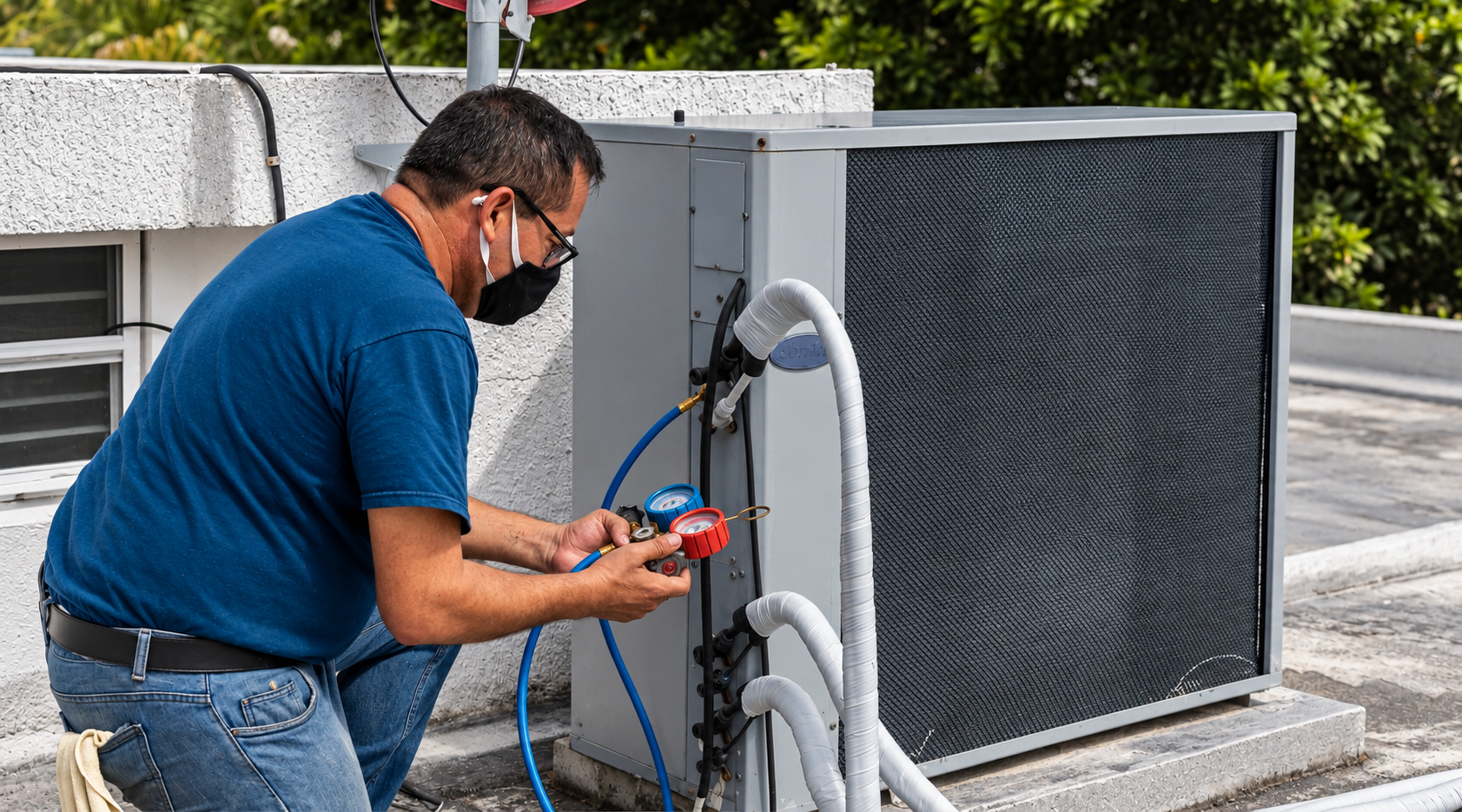
Manuel Guerrero HVAC is a small local operation, and that shapes how the work gets done. You are not routed through a call center, handed off to a salesperson, or sold a new system when a capacitor would have fixed it.
You see the part, hear what it does, and understand why it went out before you approve anything.
Replacement is a real recommendation, not a default. On an older system we lay out both numbers.
Systems here run hard from May through September. We size and service equipment for that reality.
A system replacement is rarely something anyone plans for. Financing is available so a failed unit does not have to become a crisis — ask about it when you call and we will walk you through the options.
Reviews from homeowners across the Dallas–Fort Worth area.
Our AC quit on a Saturday afternoon with the house already at 88. Manuel called back within twenty minutes and was out that evening. Bad capacitor, fixed in under an hour, and he showed me the old one and explained why it failed. Fair price, no runaround.
Two other companies told us we needed a whole new system. Manuel found a leak in the line set, repaired it, recharged the unit, and it has been running fine ever since. He could have taken the easy money and did not. That is who we call now.
Replaced our 19-year-old unit last month. He measured the house instead of just matching what was there, and told us the old one had been oversized the whole time. New system is quieter and the upstairs finally cools. Crew cleaned up completely.
Called about a heater that was blowing cold last winter and have used him for the spring tune-up since. Shows up when he says he will, texts ahead, and does not try to upsell you on things you do not need. Hard to find anymore.
Our upstairs never got below 80 no matter what the thermostat said. Turned out to be a duct issue nobody had bothered to look at. He fixed the airflow problem instead of selling us a second system. Bedrooms are comfortable for the first time.
Had him out for a maintenance check before summer. He caught a contactor that was pitted and about to fail, replaced it on the spot for a reasonable price, and probably saved us a 100-degree weekend without air. Worth doing every spring.
Serving Ellis County, southern Dallas County, and the surrounding Dallas–Fort Worth metroplex.
We also serve Mansfield in Tarrant County, Venus and Alvarado in Johnson County, and Corsicana in Navarro County. Just outside the list? Give us a call at (214) 730-3063.
Straight answers to what homeowners ask us most.
We cover the Dallas-Fort Worth area, including Waxahachie, Midlothian, Red Oak, Ennis, Ovilla, Palmer, Ferris, Maypearl, Italy, Milford, Oak Leaf, and Garrett. We also work in the Dallas County communities of Cedar Hill, DeSoto, Duncanville, Lancaster, Glenn Heights, and Mansfield. If you are just outside those areas, call and ask.
Regular hours are Monday through Friday, 8:00am to 5:00pm. After-hours emergency service is available — call the main number and we will get back to you. Losing cooling in the middle of a North Texas summer is not something that should wait until Monday morning.
The most common causes are a dirty air filter choking airflow, a failed capacitor keeping the outdoor fan or compressor from starting, low refrigerant from a leak, a frozen evaporator coil, or a bad contactor. Start by checking your filter and making sure the outdoor unit is actually spinning.
If the filter is clean and the outdoor fan is not turning, shut the system off at the thermostat and call us. Running a system that cannot move heat can damage the compressor, which is the expensive part.
Twice a year: a cooling check in the spring before the heat arrives, and a heating check in the fall. Systems in this part of Texas run far more hours than the national average because our cooling season stretches from April into October, so annual wear adds up faster here than it does in milder climates.
Most of the emergency calls we run in July and August trace back to something a spring inspection would have caught.
Nationally the range is 15 to 20 years, but in North Texas 12 to 15 is more realistic because equipment runs so many more hours per season. Systems that get regular maintenance land at the top of that range. Systems that have never been serviced often fail closer to ten.
Ice on the indoor coil or the refrigerant line almost always means one of two things: not enough air moving across the coil, or not enough refrigerant in the system. Restricted airflow comes from a clogged filter, a dirty coil, closed vents, or a failing blower. Low refrigerant means a leak somewhere.
Turn the system to off and the fan to on. That thaws the coil. Then call — freezing is a symptom, and it will come right back if the underlying cause is not repaired.
It comes down to age, the cost of the repair, and the repair history. A system under about ten years old with a single failed part is almost always worth repairing. If the unit is over fifteen, the repair is a major component like the compressor or coil, and you have already paid for repairs in recent seasons, replacement usually makes better financial sense.
We give you both numbers and let you decide. We are not going to condemn a system that has years left in it.
Proper sizing comes from a load calculation that accounts for square footage, ceiling height, insulation, window count and orientation, and how the ductwork is laid out — not from matching whatever was there before.
Oversizing is the more common mistake, and it is worse than it sounds. An oversized unit cools the air fast, shuts off before it pulls humidity out, and leaves the house feeling clammy while short cycling wears out the compressor.
On a gas furnace, cold air usually means the burners are not lighting or a safety switch has shut off the gas — often a failed igniter, a dirty flame sensor, or a clogged condensate drain. On a heat pump, brief cold air during a defrost cycle is normal, but constant cold air points to a refrigerant or reversing valve problem.
Also check that the thermostat fan is set to auto rather than on. Fan set to on runs the blower continuously and pushes room-temperature air between heating cycles.
New residential systems now ship with R-454B or R-32 instead of R-410A, following EPA rules that lowered the allowable global warming potential for new equipment. If your system was installed before 2025 it almost certainly uses R-410A.
You do not need to do anything. R-410A systems are legal to own, run, service, and recharge, and will be for the foreseeable future. What you cannot do is convert an existing R-410A system to the new refrigerants — they run at different pressures and require different components. Any contractor telling you otherwise is wrong.
Change the filter on schedule, keep the outdoor unit clear of grass and shrubs, seal duct leaks in the attic, and use a programmable thermostat so you are not cooling an empty house. Ceiling fans let you sit comfortably a couple of degrees warmer.
If your bill jumped sharply without a change in habits, that is worth a service call. A refrigerant leak or a failing component makes the system run longer to reach the same temperature, and the bill is often the first symptom you notice.
Tell us what the system is doing and we will tell you what it takes to fix it. Free estimates on replacements.
Monday–Friday 8:00am–5:00pm · After-hours emergency service available